Here’s what starts working differently.
When you add the Visual Sales Layer, your content stops asking people to imagine the result — and starts showing it.
Your posts stop living in “this resonates” and start supporting a real buying decision.
You stop guessing what to show, because the content has a job: demonstrate delivery of what possible.
Ordinary moments turn into usable evidence.
Conversations start closer to “yes.”
Selling takes less emotional effort — because the visuals are doing the work words can’t do in a burned market.

This works because visible proof changes how buying decisions are made.
When outcomes are visible, people stop hesitating —
not because they’re convinced,
but because they no longer have to assume whether the result is real.
Once visuals stopped decorating ideas and started showing delivery,
decisions happened faster.
Different people.
Different contexts.
Same result.

Before

After
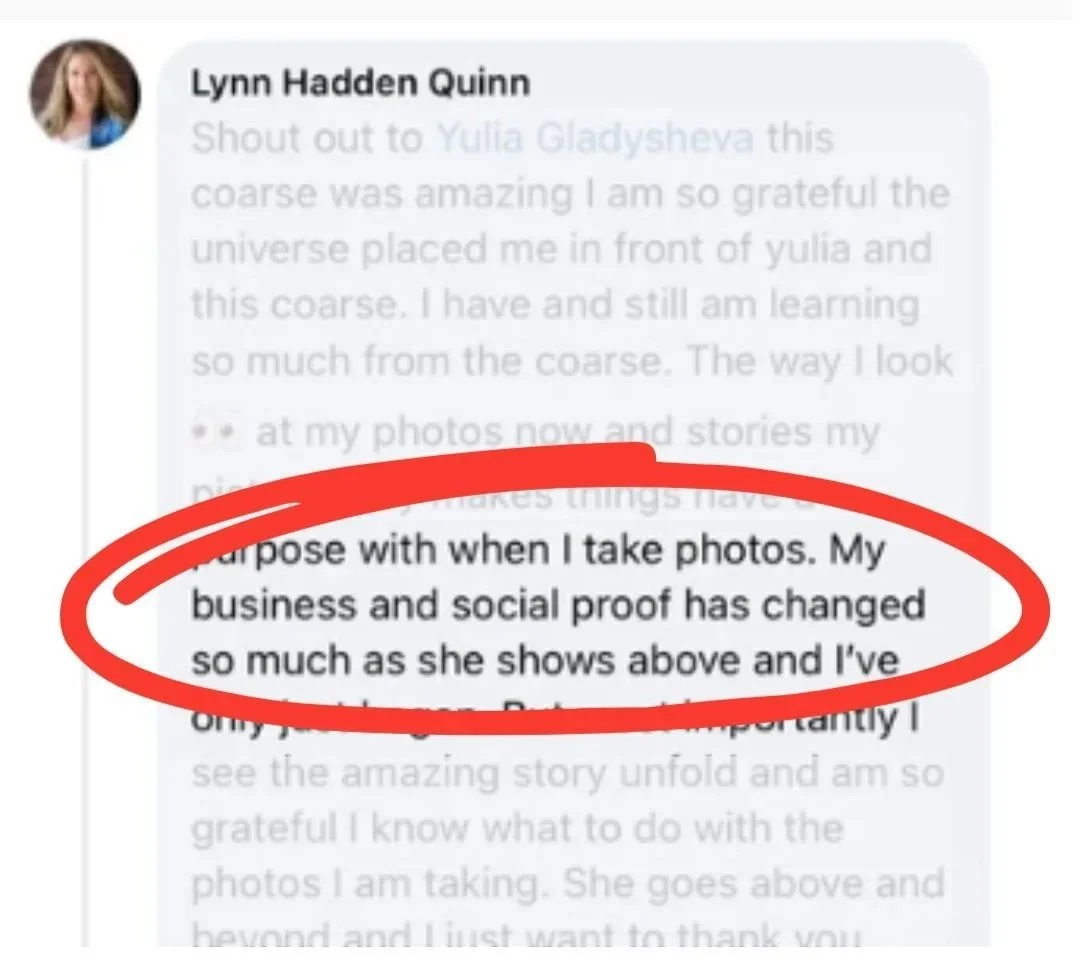
The real problem wasn’t what you were told to fix.
Your content hasn’t turned into clients because it asks people to believe you can deliver the result — instead of showing that you can.
In a burned market, belief creates hesitation. And hesitation is how buyers protect themselves. That’s why people save posts, agree in comments, say “this resonates” — and still don’t move.
The content sounded right, but it didn’t make the outcome visible. And explanation alone never fixed that gap, no matter how consistent you were.
This was never a confidence issue or a strategy issue. Your content simply didn’t give buyers enough visible grounds to feel safe choosing — and without reduced risk, effort disconnects from results.
At some point, waiting stops being harmless.
Buyer behavior has already changed.
As the market gets louder and trust stays low,
anything that doesn’t show visible proof becomes easier to ignore.
Posts still get views.
Likes. Saves.
But the gap between activity and income widens.
Waiting doesn’t keep things neutral.
It quietly makes your content less competitive.
While others adapt to how decisions are made now,
explanation-based content blends in faster,
converts slower,
and creates more instability.
The longer your content asks people to assume
instead of letting them see,
the longer hesitation stays in place.
This isn’t urgency because of trends or algorithms.
It’s urgency because the rules already changed —
and staying in the old model keeps effort disconnected from results.
This didn’t come from a course or something I repackaged.
It came from years of real client work — and from watching, in real time, why content that looks “right” still fails to convert in a burned market.
I worked inside content that was supposed to build trust, authority, and sales,
and saw exactly where decisions broke — not in theory, but in practice.
That’s why this wasn’t taught before.
The market didn’t require it yet.
Explanation used to be enough.
Today, it isn’t.
This isn’t a full system — it’s the missing foundation without which no system works.
Here’s what was missing the whole time.
The Visual Sales Layer adds one missing visual layer to your content — so people can see what your work actually leads to and feel safe moving toward a decision.
People don’t decide based on information.
They decide when risk drops.
When someone can see that your work leads somewhere real, hesitation fades.
*Nothing here is about aesthetics, personality, or lifestyle.
Look at these two coaches in the same field (Coaches | Slow Living Lifestyle) — and notice which one gives you clearer grounds to trust that their work leads somewhere real.

Who would feel safer to choose — and why?

The issue isn’t that you don’t have proof. You do.
It’s that the proof stays invisible.
Your daily work already contains signals of delivery —
your process, your environment, your interactions.
Right now, those moments aren’t being captured or used intentionally.
The Visual Sales Layer identifies the moments that create buyer readiness.
Not aesthetic moments.
Not staged content.
The moments that quietly answer: “Does this actually work?”
When those moments are visible, your visuals signal two things at once:
the result exists, and choosing you is safe.
That’s when explanation becomes less necessary.
Your visuals finish the part of the decision words never could.
Content becomes reliable.
People stop lingering in “later.”
Interest turns into action — without pushing.